
Birdwatching
About 280 bird species have been recorded at Skadar Lake. To start, all you need is patience and a pair of binoculars.
Skadar Lake National Park
A short river, a big lake and about 280 kinds of birds. Here is what lives around the village, and when to come and see it.
Picture yourself on Danilo’s Bridge early on a still morning. The green water below hardly seems to move. A bird lifts out of the reeds, and somewhere downstream a boat engine starts. This slow, quiet river is the way into something much bigger: the largest lake in the Balkans.
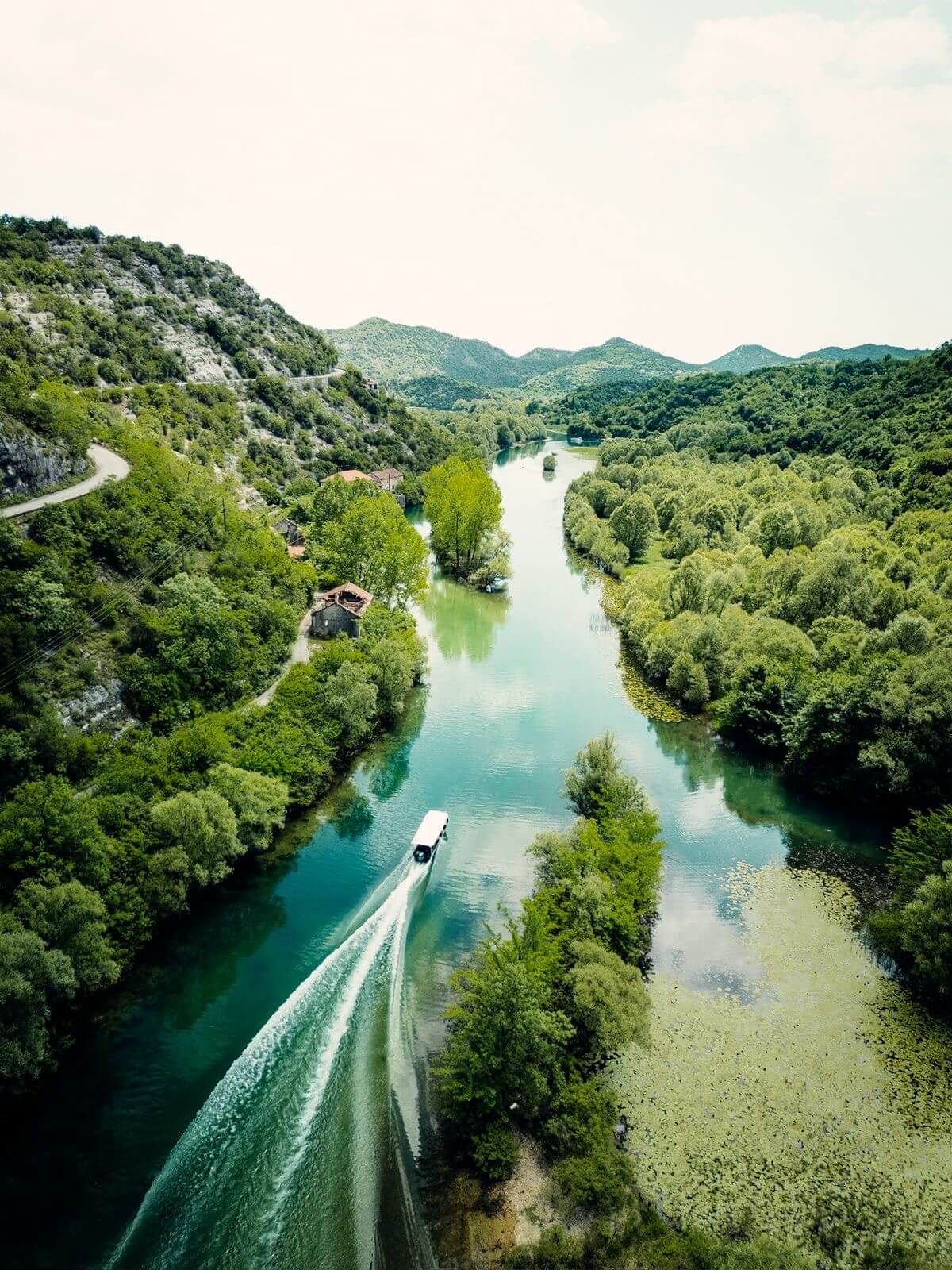
The river that gives the village its name is short: only 12.3 to 13 kilometres long. It rises in Obod cave, about 2.5 km south-west of the village, under a hill about 420 metres high. After its first kilometre the river is navigable, which means boats can use it. From the village it flows about 7 km further before it reaches Skadar Lake.
Local legend has its own story of how the river began. Ivan Crnojević’s hunters killed a giant wild goat that came out of the cave, still wet, and the water burst out after it. You can visit the cave and read more on the Obod hill and cave page.
There is also a small hydro plant here, named “Rijeka Crnojevića”. It was first built in 1941. After a rebuild it came back online in December 2024, and it now makes about 1.7 GWh of electricity a year. Read the news.
Skadar Lake changes size with the seasons. In summer it covers about 370 km². In winter it can spread to 540 km², almost half as big again. At Karuč, a fishing village on the lake, you find the “Karučko oko” spring and the deepest point of the lake, about 40 m. See places nearby.
The village sits inside Skadar Lake National Park, created in 1983. In 1995 the park was listed as a Ramsar wetland, under an international agreement that protects important wetlands. On 5 June 2026 UNESCO declared the Skadar Lake Watershed, which includes the park, a biosphere reserve. UNESCO says it is the first in Montenegro. You can read more in our news post. For entry fees and rules, see the national park page.
The village itself is in Zone III of the park, the zone for settlements. Not everyone here is happy about the park and UNESCO. A local initiative from the Riječka nahija wants its villages taken out of the park and the UNESCO programme. The ministry says the park boundaries will stay as they are. You can read both sides.
About 280 bird species have been recorded at Skadar Lake, and there are five bird-watching stations. You do not need to be an expert. Binoculars and a little patience are enough to start.
One bird gets special attention here: the Dalmatian pelican. In 2025 about 250 of them were counted. In 2026 the number rose to about 306, a record nesting season. Floating nest platforms have been in use since 2014. Find out more on the birdwatching page.
More than 40 species of fish live in the lake and the river. Among them are carp (krap), bleak (ukljeva), eel and trout.
Bleak has a long history here. According to Vuk Karadžić, people have smoked and dried it locally since at least the 1830s. In 1899 dried bleak was the village’s main export.
Fish stocks need care. At the 2026 wine and bleak festival in Virpazar, no bleak was served at all, to protect the stock. Fishing is closed from 15 March to 15 May for every species except eel. If you want to fish, read the fishing page first.
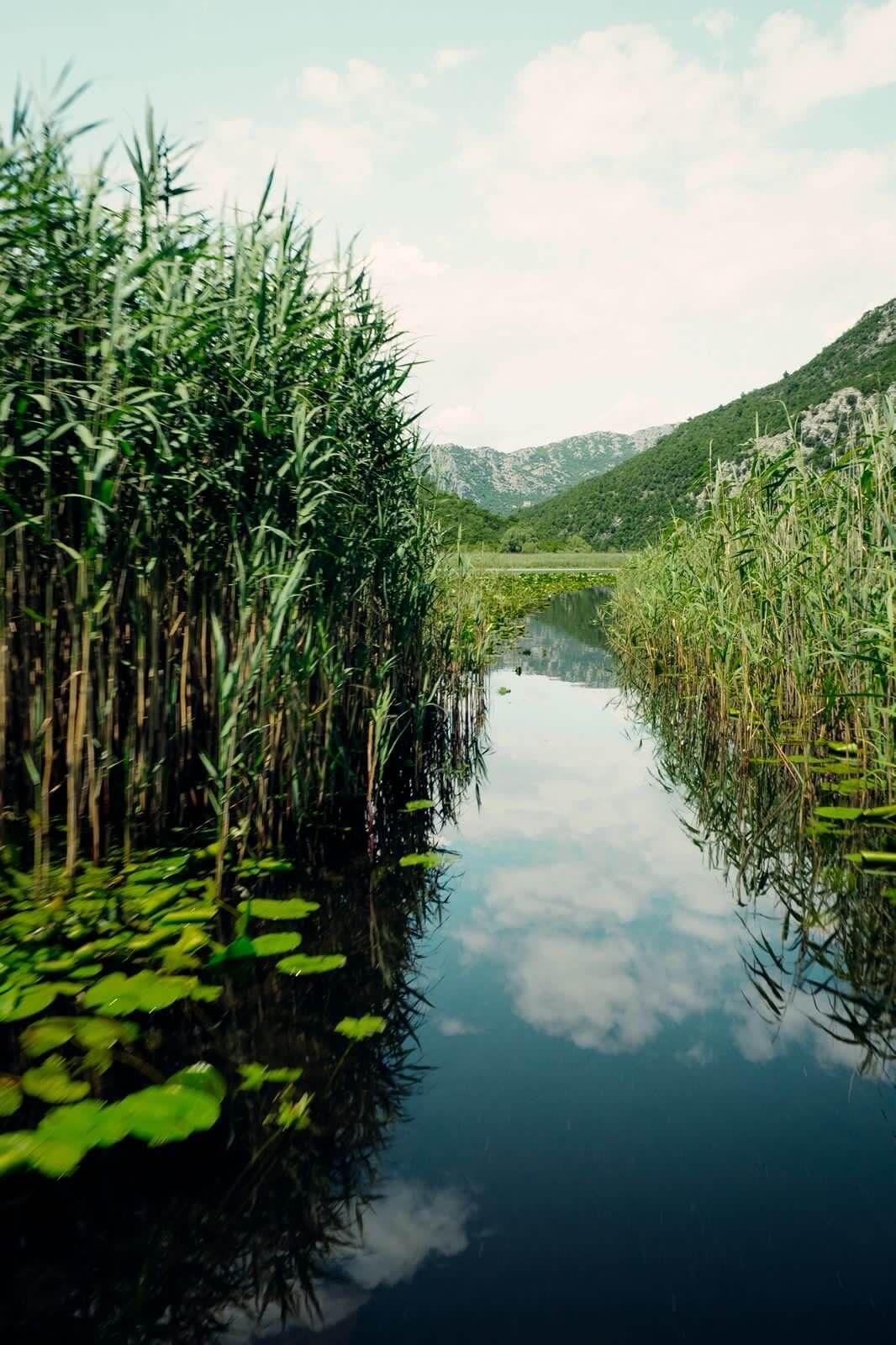
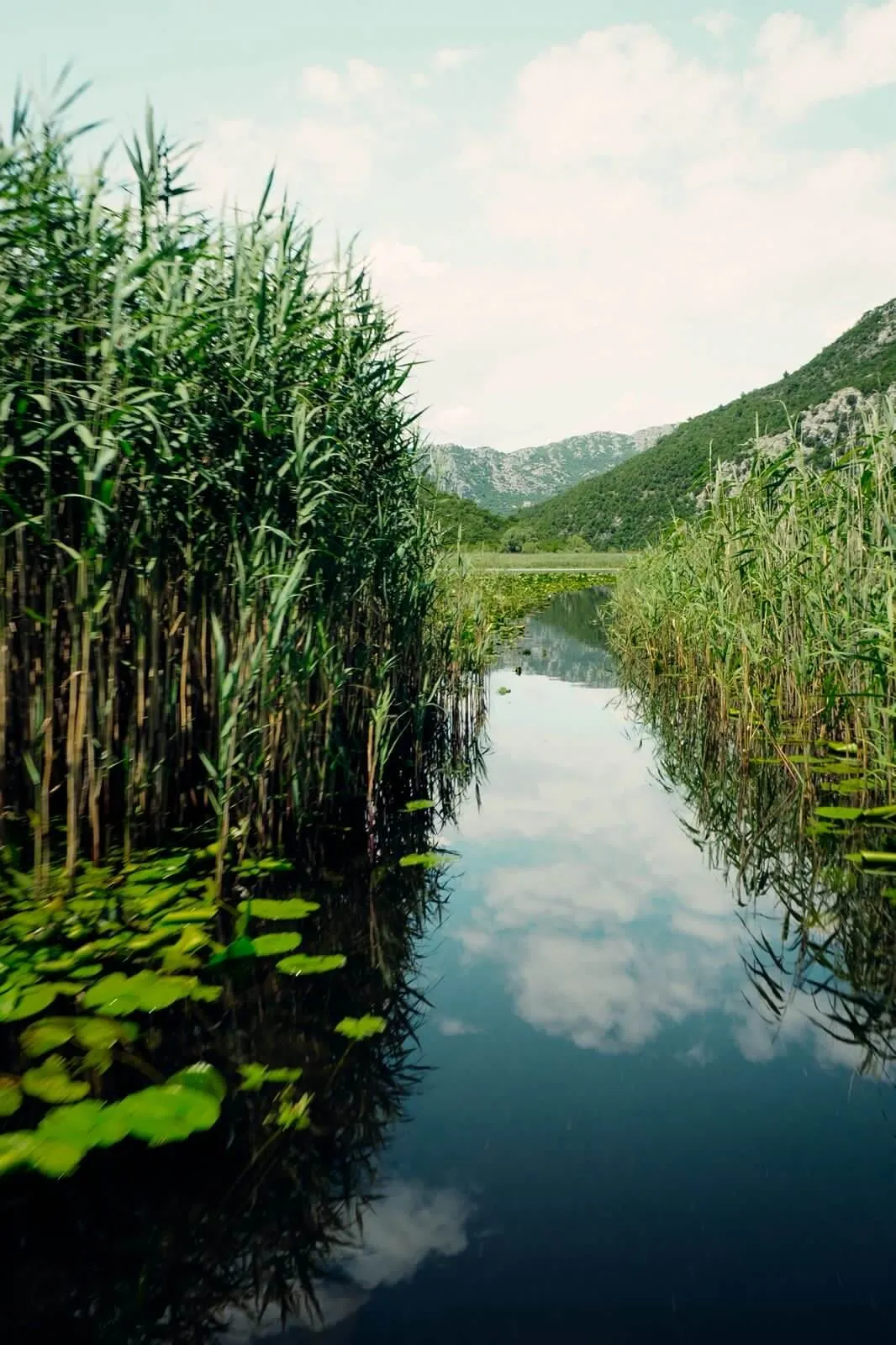
The river is green with plants. White and yellow water lilies float on the surface. Reeds and cattail grow along the banks. Boats follow narrow channels through the lily beds, nicknamed the “Amazon”.
The water here can rise fast. On 10 January 2026 the level went up 28 cm in a single day, and the riverside walk flooded. Read about the January 2026 high water.
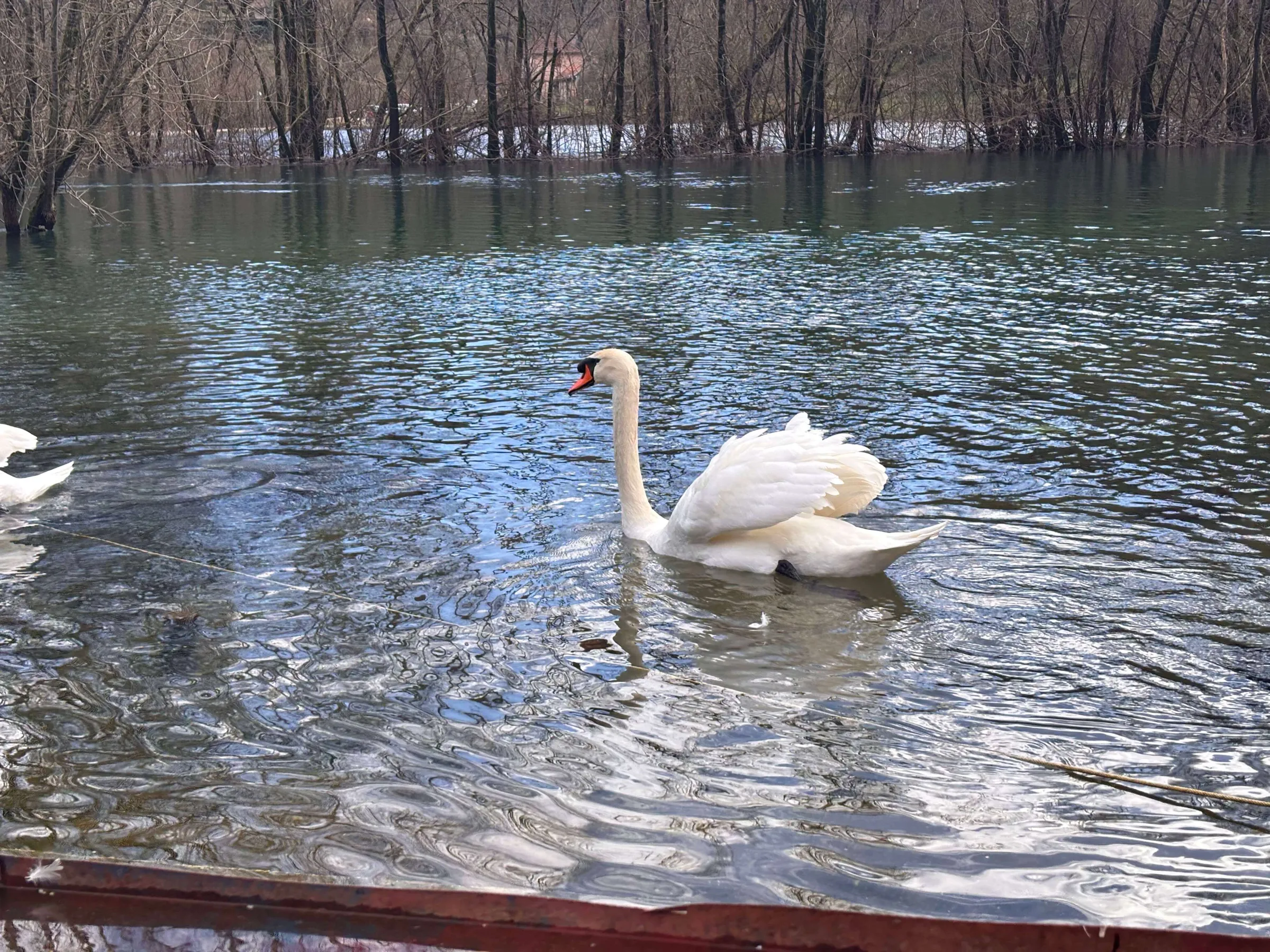
If you come in winter, check the water level before you plan a walk by the river. The path you saw in summer photos may be under water.
April to June and September to October are the most pleasant months. July and August bring crowds and heat. If you hope to see mist over the river bend from Pavlova Strana, it is most likely in October–November and March–April. For photos there, come early: the light is good between 6:30 and 8:30. There is more on when to visit.
The facts on this page were checked against these sources.
Last verified: 4 October 2026. Spotted a mistake? Tell us
About 280 bird species have been recorded at Skadar Lake. To start, all you need is patience and a pair of binoculars.
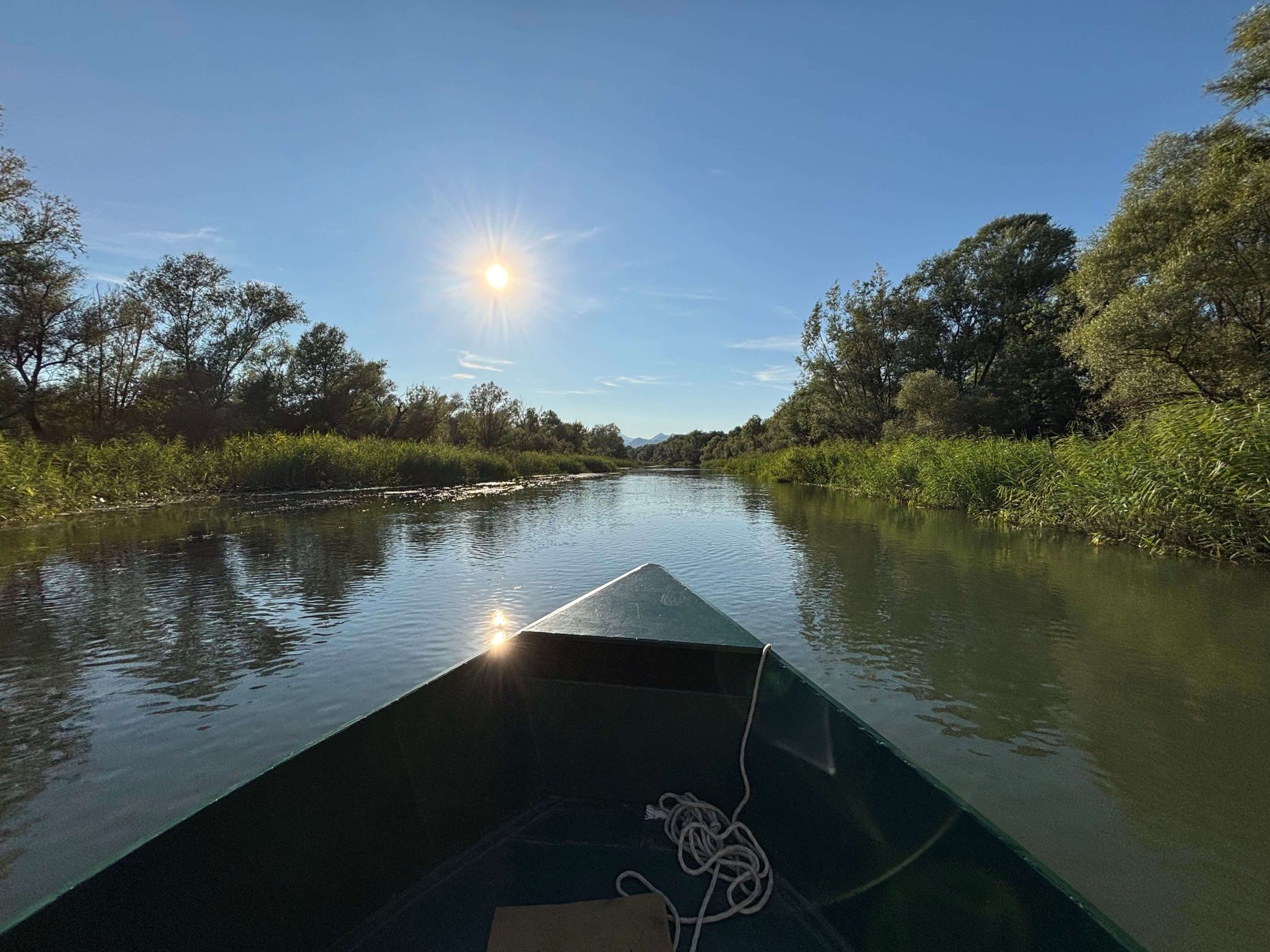
This village has made a living from fish for a long time. If you want to cast a line, you need a permit and some respect for the season.
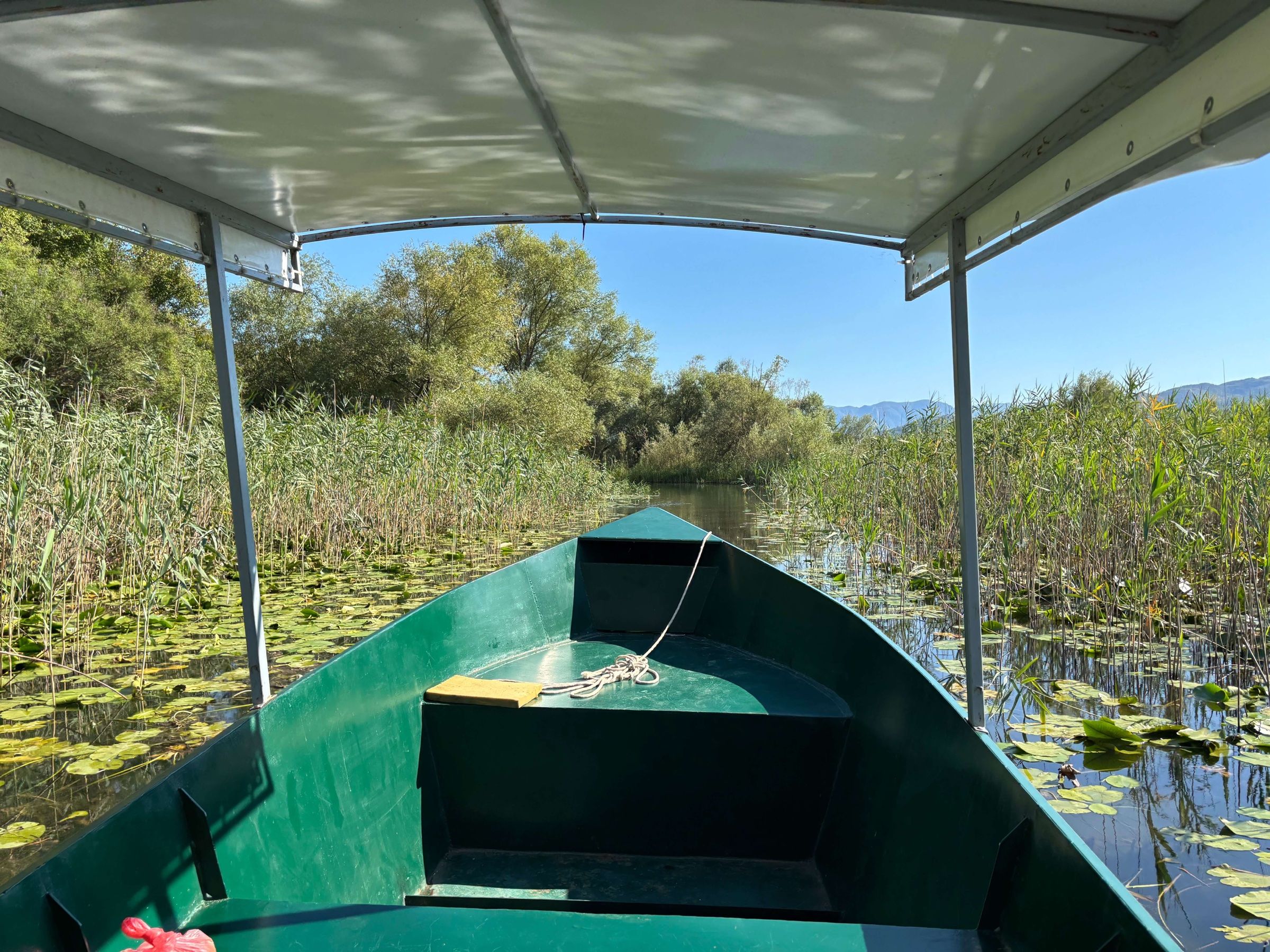
Over a hundred years ago, steamers left the village for Virpazar and Skadar. Today smaller boats carry visitors down the same river.
The village sits inside a protected landscape: a national park, a Ramsar wetland and, since 2026, a UNESCO biosphere reserve. Here is what that means for your visit.
We use Google Tag Manager for anonymous visit statistics, only with your consent.