
N
New Bridge
In 1905 King Nikola built the New Bridge, about 120 metres long. More than a hundred years later, it is still in use.
In the 1880s King Nikola built a winter palace at Ljeskovac. Today it has no roof, and its future is still undecided.
Picture a winter evening in the late 1880s. The king is spending the cold months at his new palace, and there is light in the windows. Out on the lake, a steamer is running the first regular line, started in 1885.
Today the roof is gone, and the palace stands as a ruin.
King Nikola built his winter palace at Ljeskovac in the 1880s. In 1889 the Church of the Ascension was built next to it.
It was not the first winter residence in Rijeka Crnojevića. About seventy years earlier, the village had gained a winter residence for Petar I, known today as the House of St Peter of Cetinje. It is still the oldest building in Rijeka Crnojevića.
These were busy years for Rijeka Crnojevića. In the 19th and early 20th centuries, it was Montenegro’s main lake port and market. In 1885 the steamer Žabljak started the first regular line on the lake. By 1899 the village had about 500 people, a court, a telegraph and a post office. In 1905 King Nikola also built the New Bridge. You can read about this period in the history of the Petrović-era river port.
After the First World War, the American Red Cross used the palace. A house built for a king’s winters had found a very different job. Our sources do not say what the Red Cross did there, or for how long.
Today the palace is roofless and derelict. It is owned by the town, but it is not on the heritage register, the official list of protected monuments. Danilo’s Bridge, by contrast, has been a registered cultural monument since 1950.
Restoration is blocked. Heirs of the Karađorđević family have made a restitution claim, which is a request to have property returned to them. While that claim stands, the palace cannot be restored.
In July 2026, the Lučindan foundation of the Serbian Orthodox Church asked to restore the palace and use it. Our sources do not record a decision. So who might restore the palace, and how, is still an open question.
We do not take sides on this question. We follow it on our news page about the palace’s future, and we will update this page when something changes.
Next to the palace is the Church of the Ascension, built in 1889. We could not confirm what condition it is in today, or whether it is ever open.
We could not confirm the exact way to the palace, or whether the site is fenced. Ask locally before you set out, and check the map. For roads, parking and buses, see Getting there.
While you are here, visit Danilo’s Bridge and the House of St Peter of Cetinje: together with this palace, they tell the story of the village’s port century.
The facts on this page were checked against these sources.
Last verified: 3 October 2026. Spotted a mistake? Tell us
In 1905 King Nikola built the New Bridge, about 120 metres long. More than a hundred years later, it is still in use.
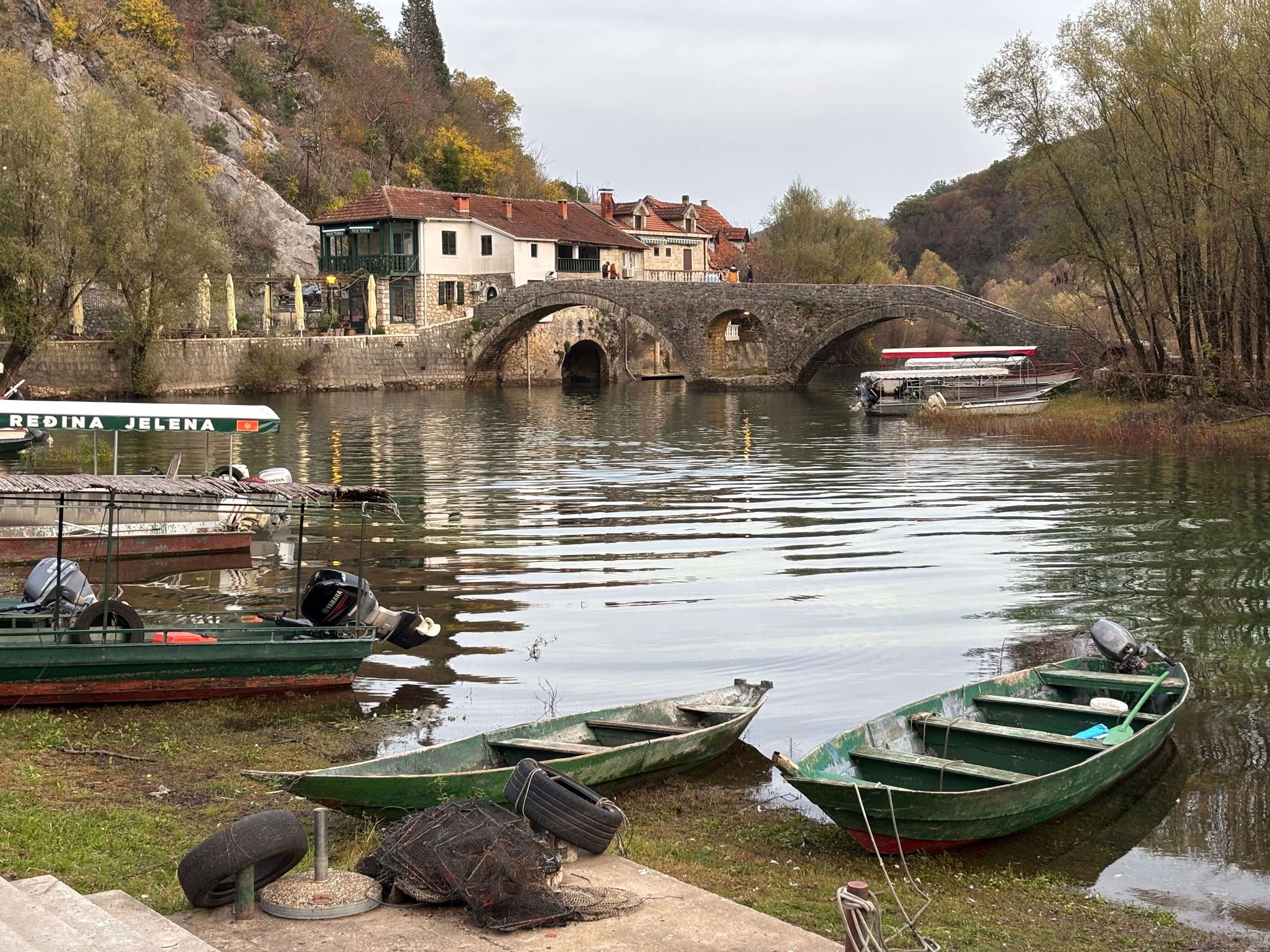
Two stone arches over a green river. Prince Danilo built this bridge in 1853 in memory of his father, and it still stands in the middle of the village.
Built between 1810 and 1815 as the winter home of Petar I, this is the oldest building in the village. Rijeka Crnojevića grew up around it.
We use Google Tag Manager for anonymous visit statistics, only with your consent.