
N
New Bridge
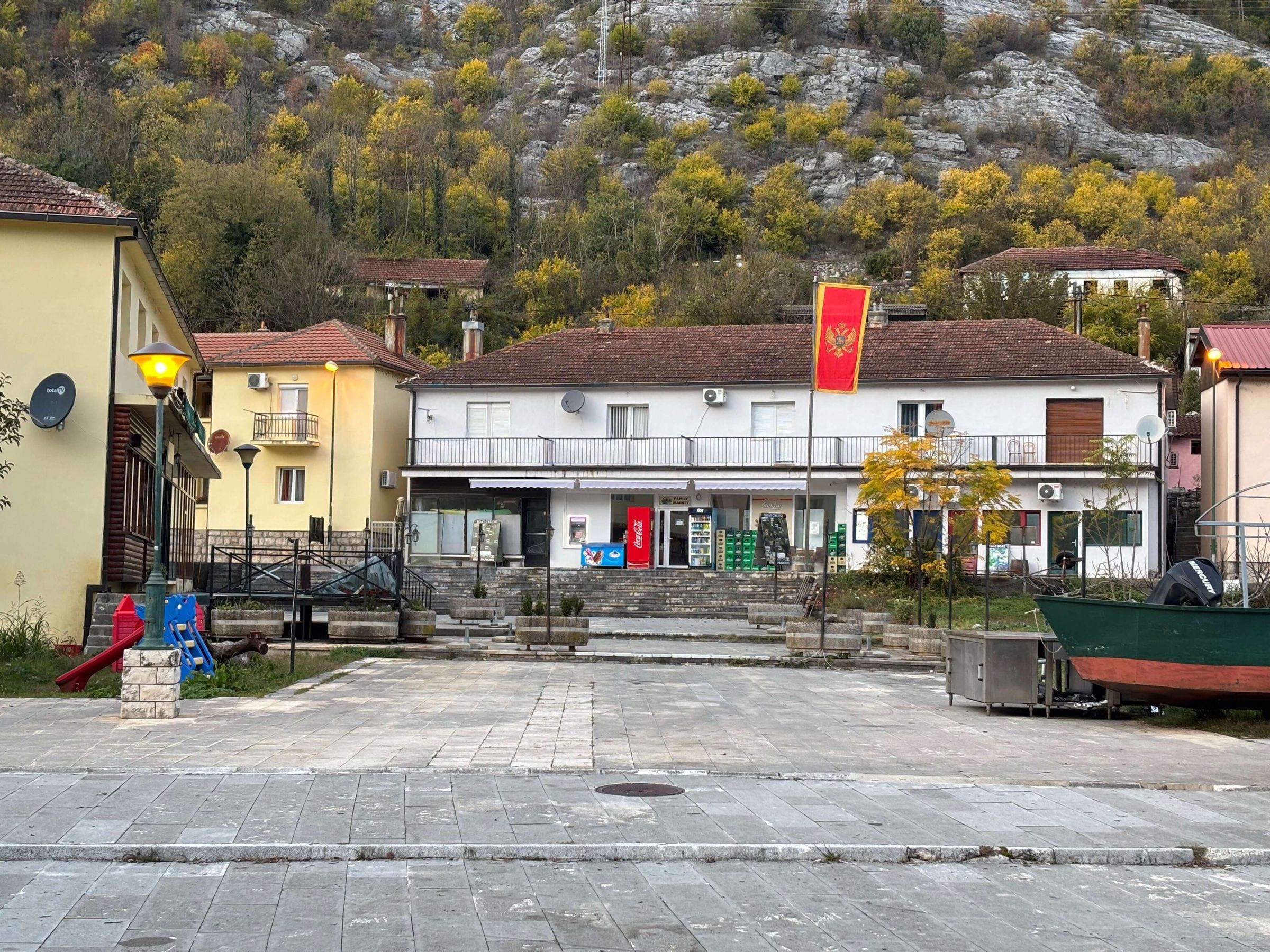
In 1905 King Nikola built the New Bridge, about 120 metres long. More than a hundred years later, it is still in use.
History · 1905–today
A century of steamers, war and canned fish, then a new road that passed the village by. Fewer than a hundred people live here now. This is their story too.
Picture a morning in the 1920s. The steamer Skenderbeg pulls away from the quay, bound for Skadar. Passengers lean on the rail as the river carries them down towards the lake. None of them could guess how much would change in the next hundred years.
The century began with a bridge. In 1905 King Nikola built the New Bridge, about 120 metres long, on the road towards Virpazar. It is still in use. The story of the busy port before it is told in the Petrović era.
In 1924 the steamer Skenderbeg started the run between Rijeka Crnojevića and Skadar. Its story ended in war. On 12 February 1942 Partisan resistance fighters scuttled it, which means they sank it on purpose. The wreck still lies 11 metres down. Somewhere under the water, the old steamer rests where the war left it.
On 13 July 1941, barricades went up here during the uprising. A plaque in the village remembers 110 people who were shot here during the war. The plaque is not on the official heritage register, but it is part of the village’s memory. If you come across it, take a moment.
The same year, 1941, the village’s small hydro power plant was first built. Its story has a hopeful ending, which we come back to below.
In 1950 Danilo’s Bridge, by then almost a hundred years old, was registered as a cultural monument. That was good news, but protection on paper is not the same as care. Poor repairs with cement have damaged it, and the bridge still needs proper conservation.
King Nikola’s winter palace at Ljeskovac had a harder fate. After the First World War, the American Red Cross used it; we can imagine relief workers in the king’s rooms. Today it is roofless and derelict. It belongs to the town but is not on the heritage register, and a restitution claim (a claim to get property back) by heirs of the Karađorđević family blocks its restoration.
In July 2026 the Serbian Orthodox Church’s Lučindan foundation asked to restore and use the palace. We follow what happens next in the palace news.
In 1965 a fish cannery called “Ribarstvo” opened. It is described as the only cannery in Europe for freshwater fish. If that is true, this small village had something no other place in Europe had. For 48 years it gave work to hundreds of people.
Picture the end of a shift: workers walking home along the river, talking, the smell of fish still on their clothes. Now picture the last shift, in 2013, when the cannery closed for good.
In 1981 the shipping company “Galeb” closed, and regular shipping on the lake came to an end. Almost a century after the steamer Žabljak opened the first regular line in 1885, it was over. For a village that had grown up with the steamers, it was a hard blow.
A year later, in 1982, the main road between Titograd (today’s Podgorica) and Cetinje stopped running through the village. Traffic no longer came through the village. We can imagine how quiet the square felt that first summer. This is where the decline began.
The census tells the story plainly:
| Year | People |
|---|---|
| 1948 | 596 |
| 1961 | 804 |
| 2003 | 216 |
| 2011 | 175 |
| 2023 | 84 (38 households) |
Behind every number in the table are real families. In 2023, 16 of the 84 were aged 70 or over. In 1899, about 500 people lived here. Today the village has fewer than one in five of that number.
In 1983 Skadar Lake National Park was created. The village lies inside it, in Zone III, the zone for settlements. In 1995 the park was listed as a Ramsar wetland, on an international list of important wetlands. For visitors, this means an entry fee and rules. For locals, it means living inside a park.
Read more about the river and the lake on nature, and about park rules and fees on the national park.
A travel site calls Rijeka Crnojevića a “sleeping beauty”. Sleeping, perhaps. The village is quiet now, but it is not empty. If you meet someone who lives here, stop and say hello.
People here earn their living from seasonal tourism, with boats, restaurants and apartments, and from wine and fishing. Before COVID, in some periods, 300 to 500 French tourists came in a single day.
You will find local businesses, listed in alphabetical order with no rankings, in our directory. Every September, Riječka noć brings fish, wine and concerts to the riverside walk. It has been held since at least 2015.
Some things are missing. In 1899 the village had a post office and a telegraph. In 2014 it had no post office, no shop and no pharmacy. We could not check what is open today, so ask locally and bring what you need.
Other things came back. The small hydro plant, first built in 1941, was rebuilt in a €1.6 million project shared with the Podgor plant. It came back online in December 2024 and now makes about 1.7 GWh of electricity a year. More in the hydro plant news.
Official plans mention the village, but little more. Cetinje’s 2025 programme speaks of the “need to develop” the village, but gives it no budget line. The proposed national park management plan for 2026–2030 includes no visitor facilities for the village either.
One change is on its way, slowly. A new road to Donji Ulići, about 8 km long, went to tender in July 2025. On 15 September 2026 the mayor said work would start “soon”; see the road news.
On 5 June 2026, UNESCO declared the Skadar Lake Watershed, which includes the national park and the village, a biosphere reserve. UNESCO says it is Montenegro’s first. More in the UNESCO news.
On 6 September 2026 the village held the first “Rijeka doživljaja” (River of Experiences). More than 150 people took part. There was a hike up Obod, an 8 km kayak and SUP route, river cruises, fish soup and a crafts fair.
For one day, the river was busy again, a little like the old port. See Rijeka doživljaja.
Not everyone welcomes the park and the UNESCO status. A local group, the Initiative Committee for Freedom and Development of Riječka Nahija (the lake side of Cetinje municipality), wants its villages taken out of both. Residents protested on 14 July 2025, and the group has threatened a lawsuit. The ministry says the park boundaries will not change. We follow the story neutrally, with sources, in the park dispute and on people and economy.
The steamers are gone and the cannery is closed. But the bridge still stands, the river still runs down to the lake, and the people who stayed still keep the village going. To see what life here looks like now, visit Rijeka today.
The village is quiet now, but it is not empty.
The facts on this page were checked against these sources.
Last verified: 4 October 2026. Spotted a mistake? Tell us
In 1905 King Nikola built the New Bridge, about 120 metres long. More than a hundred years later, it is still in use.
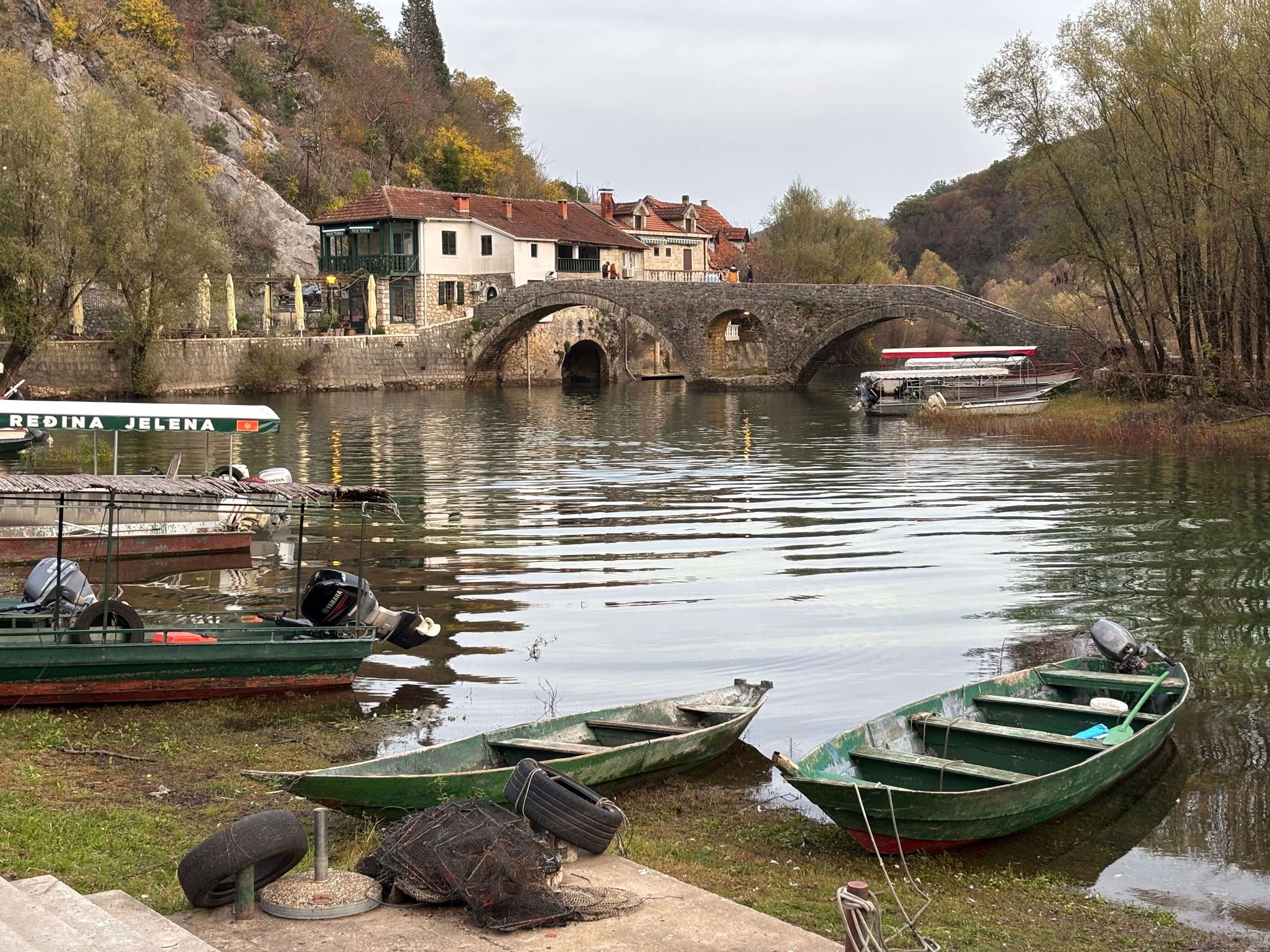
Two stone arches over a green river. Prince Danilo built this bridge in 1853 in memory of his father, and it still stands in the middle of the village.
In the 1880s King Nikola built a winter palace at Ljeskovac. Today it has no roof, and its future is still undecided.
We use Google Tag Manager for anonymous visit statistics, only with your consent.