
The Twentieth Century
A century of steamers, war and canned fish, then a new road that passed the village by. Fewer than a hundred people live here now. This is their story too.
In 1961 more than 800 people lived here. In 2023 there were 84. This is the story behind those numbers, and about the people who stayed.
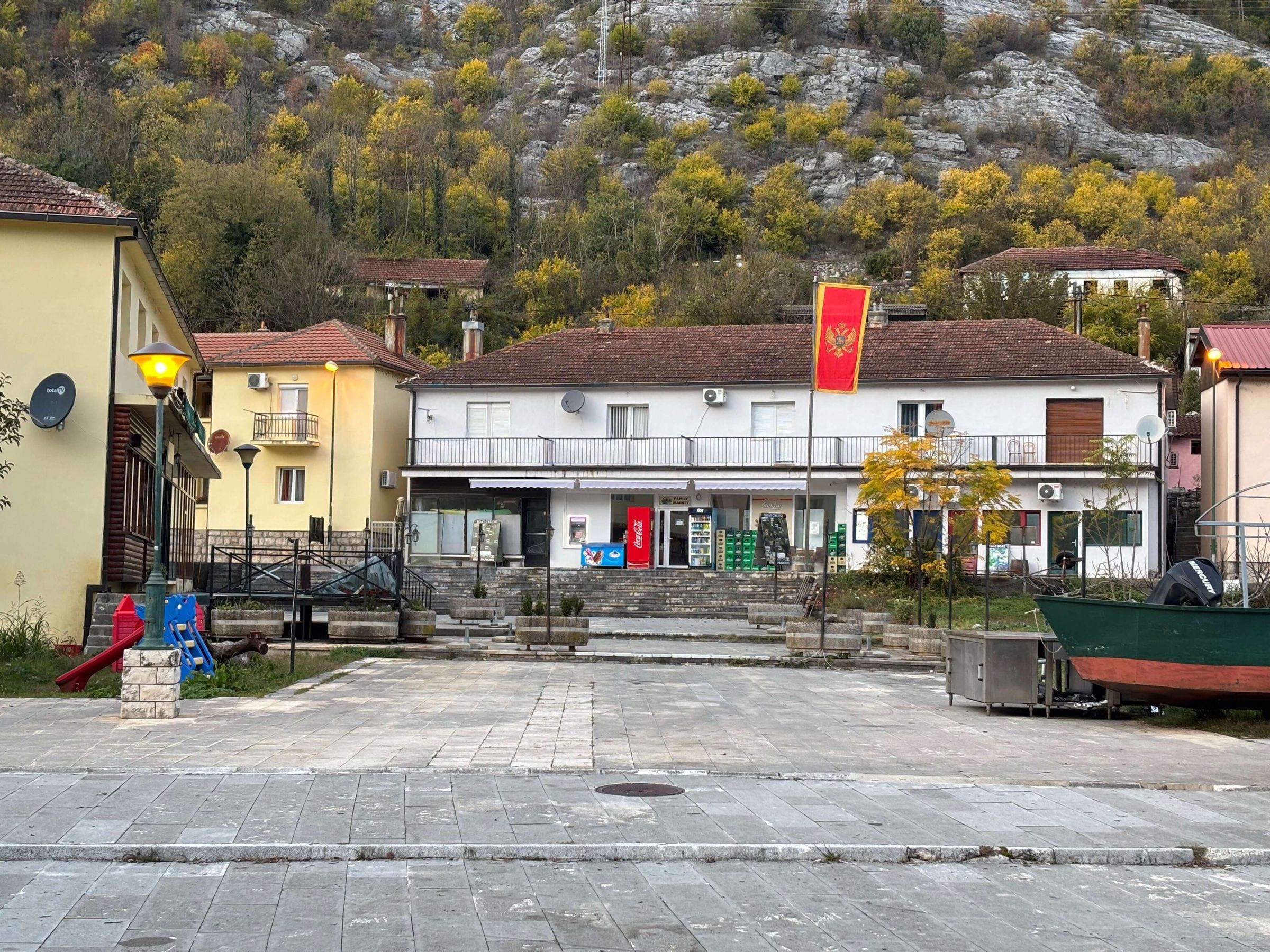
Picture the riverside in 1961. More than 800 people live in the village. Boats still leave the quay for the lake, and the main road between Titograd and Cetinje still runs through the village. Now picture the same walk on a winter evening today, with 84 neighbours. This page is about that change, and about the people who stayed.
The 1948 census counted 596 people. By 1961 there were 804, the highest number in any census since 1948. After that, the number fell at every count. There were 216 people in 2003, 175 in 2011 and 84 in 2023. In just twelve years, the village lost more than half of its people.
In 2023 those 84 residents lived in 38 households. By nationality, 53 were Montenegrins and 27 were Serbs. The other 4 belong to groups so small that the census office does not publish their exact numbers. The age groups are fairly even. Each of the five groups from age 30 upwards has between 10 and 16 people, and 16 residents are aged 70 or over.
For a long time, Rijeka Crnojevića was Montenegro’s main lake port and market. In 1899 steamers ran from here to Virpazar, Skadar and Plavnica. You can read that story in the river port years.
The census shows the numbers falling soon after 1961. Then two changes came close together. In 1981 regular shipping on the lake ended, when the shipping company “Galeb” closed. In 1982 the main Titograd–Cetinje road stopped running through the village. Sources date the decline from this moment, even though the numbers had already started to drop.
One big employer lasted longer. From 1965 to 2013 the “Ribarstvo” cannery worked here. It was described as the only cannery for freshwater fish in Europe. Sources disagree on how many people worked there: some say 300, others 480. It closed in 2013. There is more about these years in the twentieth century.
Today the main earners are seasonal tourism, wine and fishing. In the season, local people run boat trips and restaurants and rent out apartments. Some make wine. Others fish the river and the lake. If you run a local business, you can be listed for free in our neutral directory.
Visitor numbers can be large. Before COVID, 300 to 500 French tourists a day came in some periods.
There is news on energy, too. The small hydro plant “Rijeka Crnojevića”, first built in 1941, restarted in December 2024 after a rebuild. It produces about 1.7 GWh a year. Read more in our news post.
Cetinje’s 2025 programme mentions the “need to develop” the village. It does not give the village its own budget line.
Rijeka Crnojevića is part of Prijestonica Cetinje, a municipality of 910 km². The village lies on its lake side, in the area called the Riječka nahija. Nahija is an old word for a district. “Rijeka” was already listed as one in an Ottoman tax register in 1523.
The village has a local community council, the Mjesna zajednica “Rijeka Crnojevića”. We could not find current contact details for it. If you know them, please send them to us and we will add them here.
The village also lies inside Skadar Lake National Park, in Zone III, the zone for settlements. Since 5 June 2026 it has also been part of a UNESCO biosphere reserve, the Skadar Lake Watershed. A local initiative wants its villages taken out of the park; the ministry says the boundaries will stay. We explain both positions in the national park dispute.
In 1899 the village had a court, a telegraph and a post office. In 2014 it had no pharmacy, no post office and no shop. We could not confirm what exists today, so please ask locally.
The nearest health centre is Dom zdravlja Cetinje. There is no confirmed ATM in the village, so bring cash in euros. Emergency numbers and other everyday details are on our practical information page.
Do you live here and know what has opened or closed? Tell us, and we will update this page.
The facts on this page were checked against these sources.
Last verified: 4 October 2026. Spotted a mistake? Tell us
A century of steamers, war and canned fish, then a new road that passed the village by. Fewer than a hundred people live here now. This is their story too.
Short posts about what is changing in and around the village.
On 14 July 2025 residents of the Riječka nahija protested over the national park. Here is what each side says.
We use Google Tag Manager for anonymous visit statistics, only with your consent.