
N
New Bridge
In 1905 King Nikola built the New Bridge, about 120 metres long. More than a hundred years later, it is still in use.
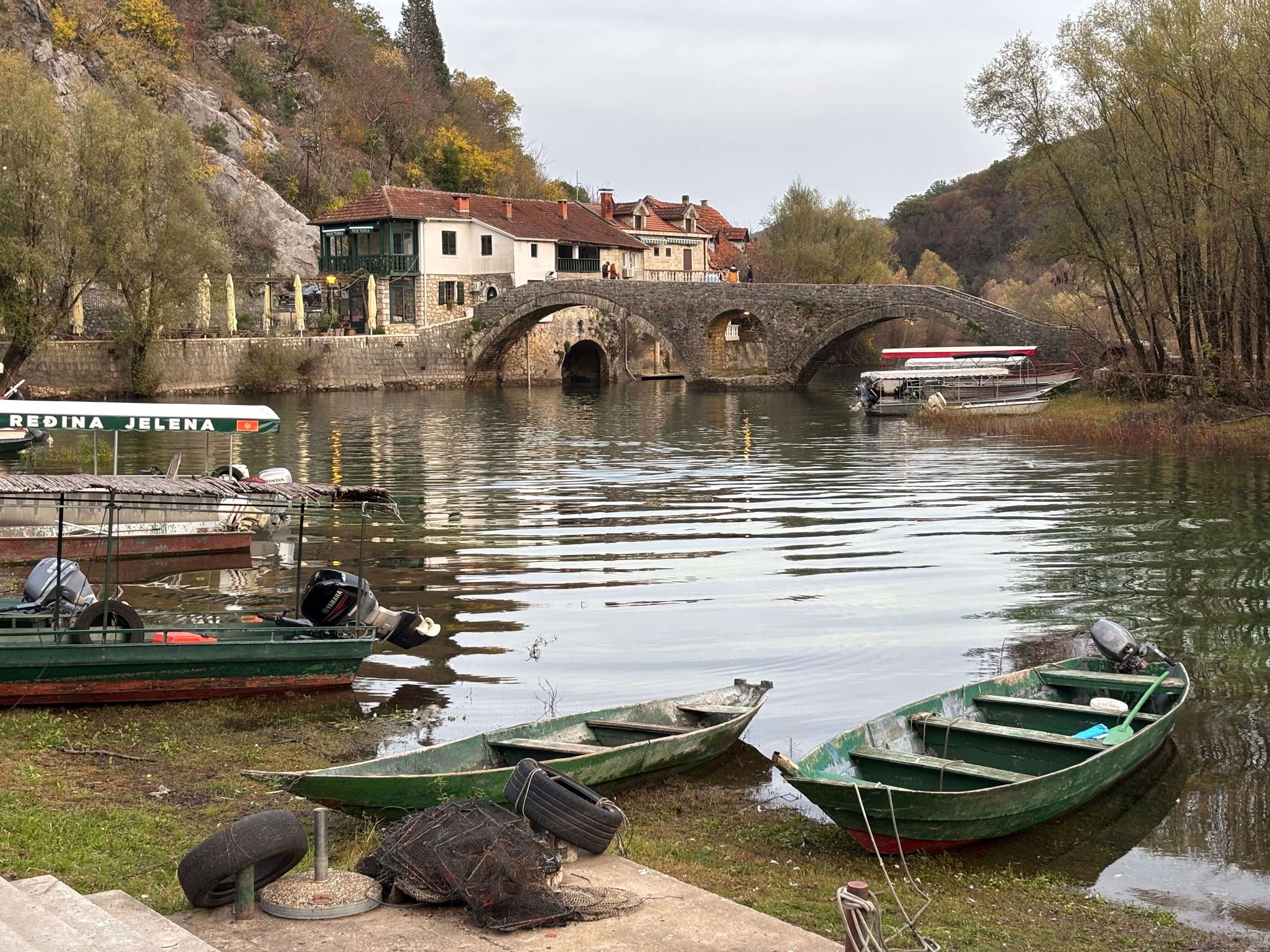
Sight · 1853
Two stone arches over a green river. Prince Danilo built this bridge in 1853 in memory of his father, and it still stands in the middle of the village.
On a still morning, the river under Danilo’s Bridge is as smooth as glass. Two stone arches stand in the water, and their reflections turn each one into a full circle. Flat wooden boats wait by the bank. This is Danilov most, the bridge at the heart of Rijeka Crnojevića.
Prince Danilo built the bridge in 1853, in memory of his father, Stanko.
He was not the first to cross the river at this spot. In the 1830s and 1840s, Njegoš kept the state guard, the Gvardija, in the village, and a wooden bridge stood here in those years.
Danilo’s bridge is made of limestone. It is 43 metres long and only 1.7 to 2 metres wide. It rests on two large arches. Beside them are two smaller relief openings, which let extra water through when the river is high. On the upstream side, a pointed stone edge called an icebreaker faces the current.
Those openings have work to do. The river here can rise fast: on 10 January 2026 it went up 28 cm in a single day and flooded the riverside walk.
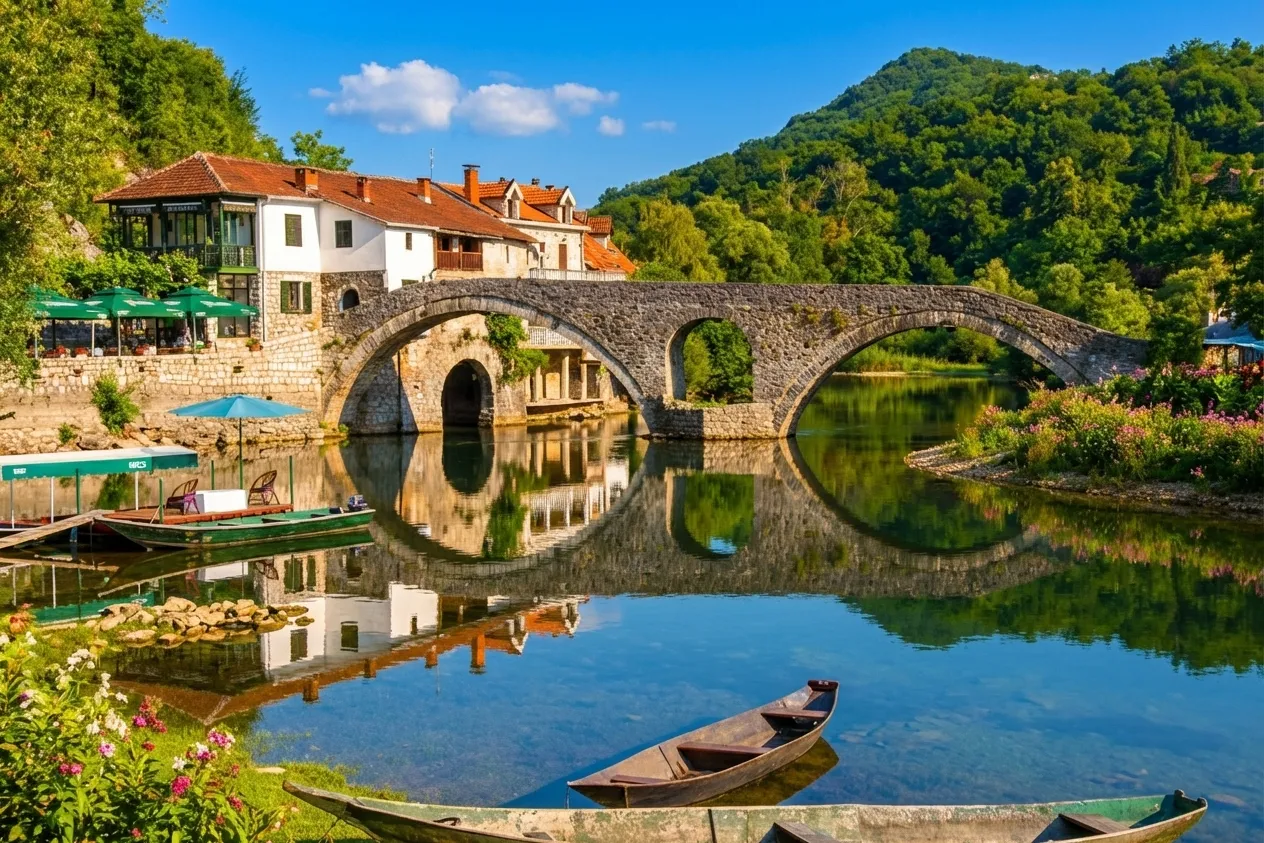
The bridge belongs to the village’s port years. In the 19th and early 20th centuries, Rijeka Crnojevića was Montenegro’s main lake port and market. That story is told in the history of the Petrović-era river port.
We could not confirm whether the hook can still be seen. If you spot it, tell us. More stories like this one are in Legends.
Next to the bridge stands Mostina, the house Prince Danilo built beside the bridge. Today it is a restaurant, Konoba Mostina. It is listed with the other places to eat in our neutral restaurant directory.
Danilo’s Bridge has been protected as a cultural monument since 1950. Even so, it has not always been treated with care. Poor repairs made with cement have damaged it. The bridge needs proper conservation: slow, careful work by heritage experts.
The bridge is in the village centre. If you come by car, parking is free at the village entrance; in July and August, try to arrive before 11:00. There is no direct bus: take a bus to Cetinje or Podgorica, then a taxi. Cetinje is 16–17 km away (about 25 minutes) and Podgorica about 30 km (about 40 minutes). You will find all the details on Getting there, and the bridge is marked on the map.
Rijeka Crnojevića has a second historic bridge: the New Bridge, built by King Nikola in 1905 and about 120 metres long. The House of St Peter of Cetinje, built in 1810–15, is the oldest building in the village. And about 3 km by road above the village, Pavlova Strana looks down on the river’s famous horseshoe bend.
The facts on this page were checked against these sources.
Last verified: 3 October 2026. Spotted a mistake? Tell us
In 1905 King Nikola built the New Bridge, about 120 metres long. More than a hundred years later, it is still in use.
Built between 1810 and 1815 as the winter home of Petar I, this is the oldest building in the village. Rijeka Crnojevića grew up around it.
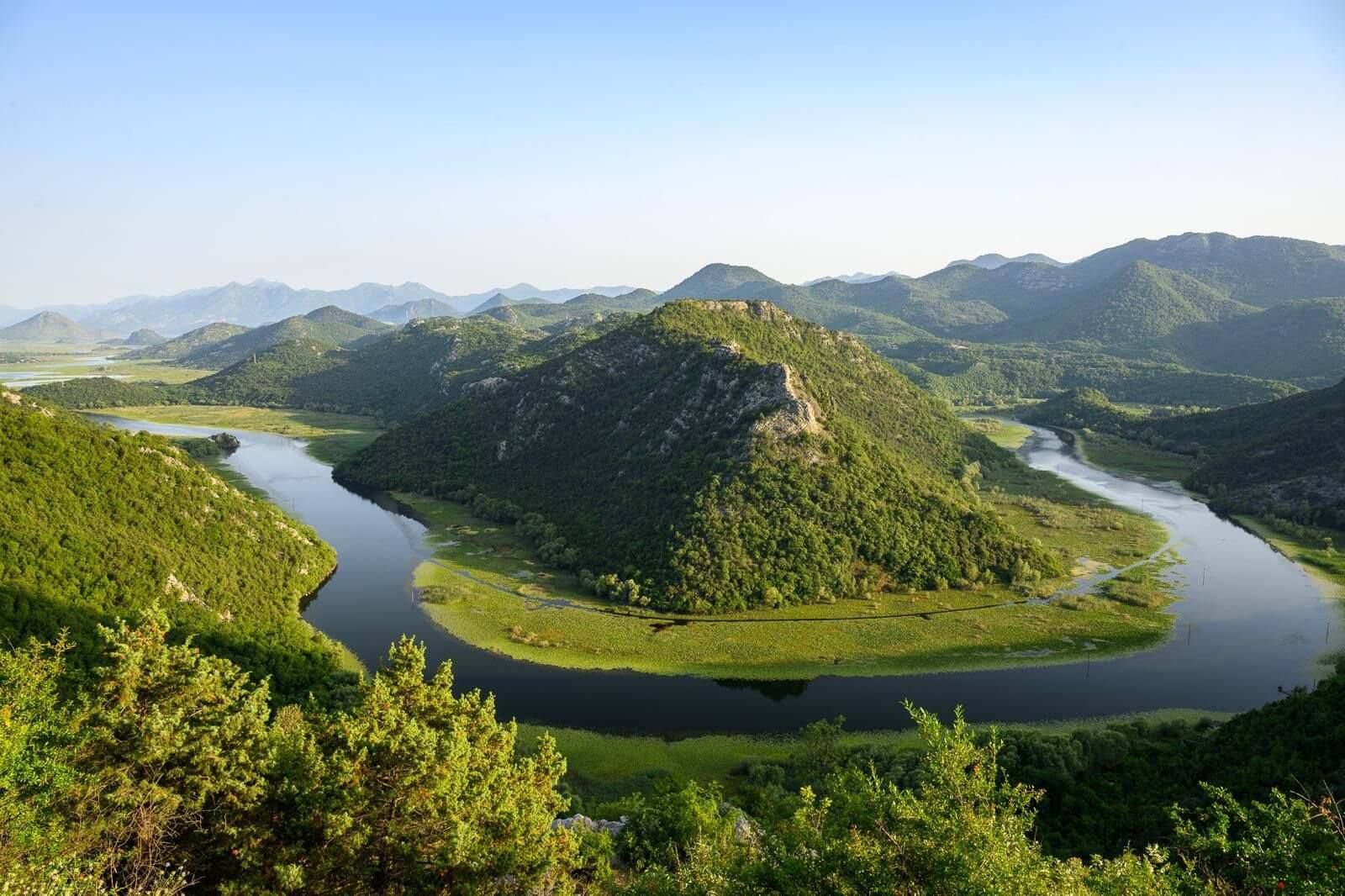
Here the river turns in a wide horseshoe bend. From Pavlova Strana you see the whole bend from above, with the lake behind it.
We use Google Tag Manager for anonymous visit statistics, only with your consent.