
O
Obod and the cave
A ruined fortress, a rebuilt church and a room linked to the first Cyrillic book printed among the South Slavs. About 2.5 km from the village, the river itself comes out of a cave.
Before there was a village by the bridge, there was a fortress on the hill. This is the story of the family who built it, and of the river that still carries their name.
Picture men hauling stone up a steep, rocky hill. On the summit, new walls are rising. Below them, a green river runs slow and quiet. The man who ordered the work is Ivan Crnojević, ruler of Zeta.
The story of our village does not begin down by the water. It begins up here, on the hill of Obod.
In the second half of the 15th century, the Crnojević family ruled Zeta. But their mark on this landscape is older than Ivan.
Between 1415 and 1427, Đurađ and Lješ Crnojević built the monastery of Kom. Its 15th-century frescoes can still be seen today. Centuries later, in 1831, Njegoš was ordained there. You reach Kom mostly by boat or by car; see around the village.
Kom shows us the family not only as rulers, but as builders who gave to the church. That habit will come back in our story, too.
Keep the name Đurađ in mind. The family used it more than once, and a later Đurađ will matter a great deal to this village.
Ivan Crnojević ruled Zeta from 1465 to 1490. Around 1475 he fortified Obod. The small fortified town on the hill is also called Riječki grad, which simply means “the town of Rijeka”.
We don’t know what the walls looked like when they were new. Today only ruins remain, and you can still walk up to them from the village.
In 1478 the Ottomans took Žabljak, the Crnojević fortress that had been Ivan’s capital. Ivan moved his seat to Obod. For a short time, this hill was the centre of his state.
We can imagine the mood. A court that had just lost its home settled in behind new walls. People kept a close eye on the road and the river, and wondered what would come next.
It did not last long. Between 1482 and 1484 Ivan moved his capital again, this time to Cetinje, about 16–17 km away. Today the drive takes about 25 minutes. His court went first, in 1482. The monastery followed in 1484.
Ivan did not forget the river. In 1485 he issued a charter, a formal document from the ruler. It gave a water mill at Obod to the monastery of St Nicholas. The charter says it was “written in Rijeka”.
Those three words matter. Three years after the court had left, the place had a name of its own, and a ruler’s charter was still written here.
Picture that mill. Water turns the wheel, the stones grind, and grain becomes flour. Monks carry the heavy sacks home. It was a small, everyday gift, and that is exactly why it brings the past so close.
After Ivan came his son, Đurađ Crnojević.
In 1492–1493 Đurađ set up a printing press brought from Venice. The printer was hieromonk Makarije, a monk who was also a priest. On 4 January 1494 (by the Julian calendar), Makarije finished the Oktoih prvoglasnik. It is the first Cyrillic book printed among the South Slavs. It has 270 leaves printed in red and black, and about 105–108 copies survive. More books followed until 1496.
The press began at Obod according to tradition; colophons place later printing at Cetinje. A colophon is the short note at the end of an old book that says who printed it. We tell the whole story, and explain that question, in The Obod Printing House.
In 1496 the Ottomans forced Đurađ out, and Ottoman rule began. The Crnojević years on Obod were over. The press fell silent.
We can only imagine how people here felt that year. The ruler was gone, the press was still, and new masters held the hill.
For the next two centuries, the sources we use say little about daily life here. What they give us instead are a few hard dates.
The place did not disappear. In 1523 an Ottoman tax register recorded “Rijeka” as a nahija, which means a district. So by then, Rijeka was the name of a whole district, not just of a place by the water. The name has lasted a long time. Today the lake side of Cetinje municipality is still called the Riječka nahija.
Obod itself suffered. In 1692 the Ottomans destroyed the monastery on Obod and built a mosque on the site. Fifty-one years later, in 1743, the Church of St Nicholas on Obod was rebuilt. We don’t know who rebuilt it. The sources we use give only the year.
Some seventy years after that, a new village began to grow by the water. Between 1810 and 1815 a house was built here as the winter residence of Petar I (St Petar Cetinjski), and the village grew around it. That story belongs to the next chapter.
One thread still ties the two eras together. The House of St Petar Cetinjski, the oldest building in the village, belongs to the Obod monastery today.
The story of our village does not begin down by the water. It begins up here, on the hill of Obod.
You can still climb Obod on foot. On the hill you will find the ruins of Ivan’s fortress and the Church of St Nicholas. There is also a cellar room linked to the printing press, marked with a marble plaque. See Obod hill and cave for the walk, or try the Obod eco-trail if you want a longer day out.
To see where the family’s story began, visit Kom monastery and the fortress of Žabljak Crnojevića. Both are around the village, and both are easiest to reach by boat or by car. In 2026, the Days of Žabljak Crnojevića were held on 26–27 September.
Every time you say the name of this village, you say the family’s name too. Rijeka Crnojevića means “the River of the Crnojevićs”.
The river itself rises in Obod cave, about 2.5 km south-west of the village. It runs for about 12.3–13 km before it reaches Skadar Lake.
The fortress is in ruins, and the court left more than five hundred years ago. But the river still carries their name, every day, all the way down to the lake. For the stories people tell about that river, read the legends.
The facts on this page were checked against these sources.
Last verified: 3 October 2026. Spotted a mistake? Tell us
A ruined fortress, a rebuilt church and a room linked to the first Cyrillic book printed among the South Slavs. About 2.5 km from the village, the river itself comes out of a cave.
Built between 1810 and 1815 as the winter home of Petar I, this is the oldest building in the village. Rijeka Crnojevića grew up around it.
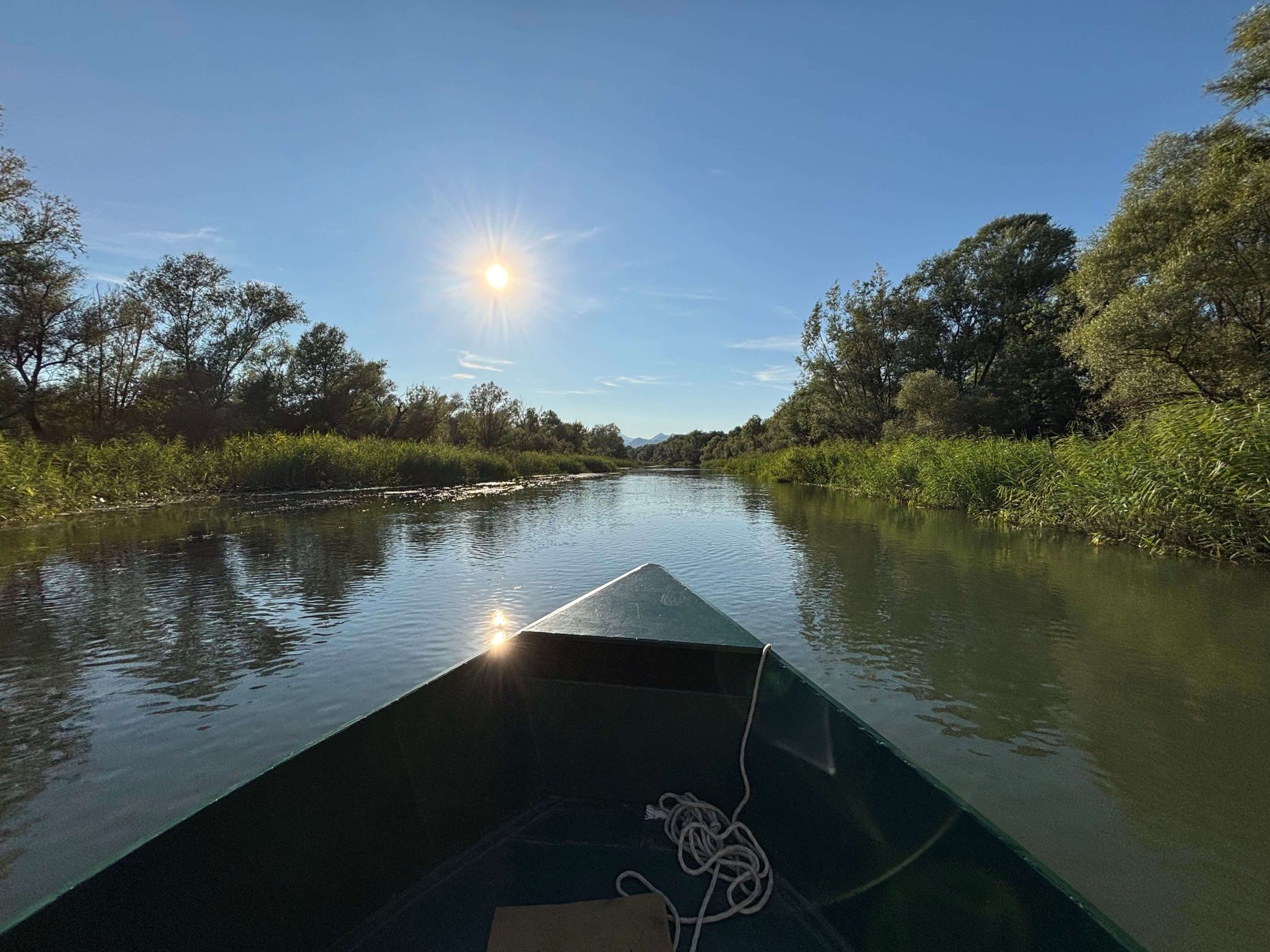
The river flows on to the lake, and the story of the Crnojevićs goes with it. These places are a boat ride or a drive away.
We use Google Tag Manager for anonymous visit statistics, only with your consent.