
H
House of St Peter
Built between 1810 and 1815 as the winter home of Petar I, this is the oldest building in the village. Rijeka Crnojevića grew up around it.
A ruined fortress, a rebuilt church and a room linked to the first Cyrillic book printed among the South Slavs. About 2.5 km from the village, the river itself comes out of a cave.
Picture a winter’s day in January 1494. A monk called Makarije lifts a fresh page from the press. The letters are Cyrillic, printed in red and black. If tradition is right, it happened here, on Obod.
Today Obod is quiet. You come on foot to find the ruins of a fortress, a church and a cellar room with a marble plaque. And about 2.5 km from the village, the river that shares the village’s name comes out of a cave.
Ivan Crnojević ruled Zeta from 1465 to 1490. Around 1475 he fortified Obod. In 1478 Žabljak, his earlier capital, fell to the Ottomans, so Ivan moved his seat here. For a short time, around 1478–1482, Obod was his capital. Then he moved the capital to Cetinje: the court in 1482, the monastery in 1484.
The old town on Obod is also called Riječki grad, “the town of Rijeka”. Only the ruins of Ivan’s fortress are left today.
One small detail brings that time close. Ivan’s charter of 1485 was “written in Rijeka”. In it, he gave a water mill at Obod to the monastery of St Nicholas. A ruler, a river and a mill: everyday life in one line. Read more in The Crnojević dynasty and Obod.
The monastery of St Nicholas already stood at Obod in Ivan’s time. In 1692 the Ottomans destroyed it and built a mosque on the site. The Church of St Nicholas was rebuilt in 1743.
The Obod monastery still has a link with the village: the House of St Peter of Cetinje belongs to it. We could not confirm when the church is open to visitors.
In 1492–1493 Đurađ Crnojević set up a printing press brought from Venice. The printer was the hieromonk Makarije, a monk who was also a priest. The Oktoih prvoglasnik was finished on 4 January 1494 (Julian calendar). It is the first Cyrillic book printed among the South Slavs. It has 270 leaves printed in red and black, and about 105–108 copies survive.
On Obod, a cellar room is linked to the press. A marble plaque marks it. For the full story, read The Obod printing house.
The river is only 12.3–13 km long. It rises in Obodska pećina (Obod cave), about 2.5 km south-west of the village, under a hill about 420 m high. After its first kilometre, boats can use it.
A source from 2010 says the cave is free to enter and that you should bring a torch. That is old information, and things may have changed. Ask in the village before you go. More stories are in Legends.
You reach Obod on foot. Start in the village: see Getting there for parking and buses. Parking at the village entrance is free; in July and August, arrive before 11:00.
For a longer walk, there is the Obod eco-trail. It is about 7 km and takes about 3 hours, but sources give different lengths and times. See Hiking for more. We could not confirm trail markings or a trail map, so ask locally before you set off. In September 2026, the first Rijeka doživljaja festival included an Obod hike.
The facts on this page were checked against these sources.
Last verified: 3 October 2026. Spotted a mistake? Tell us
Built between 1810 and 1815 as the winter home of Petar I, this is the oldest building in the village. Rijeka Crnojevića grew up around it.
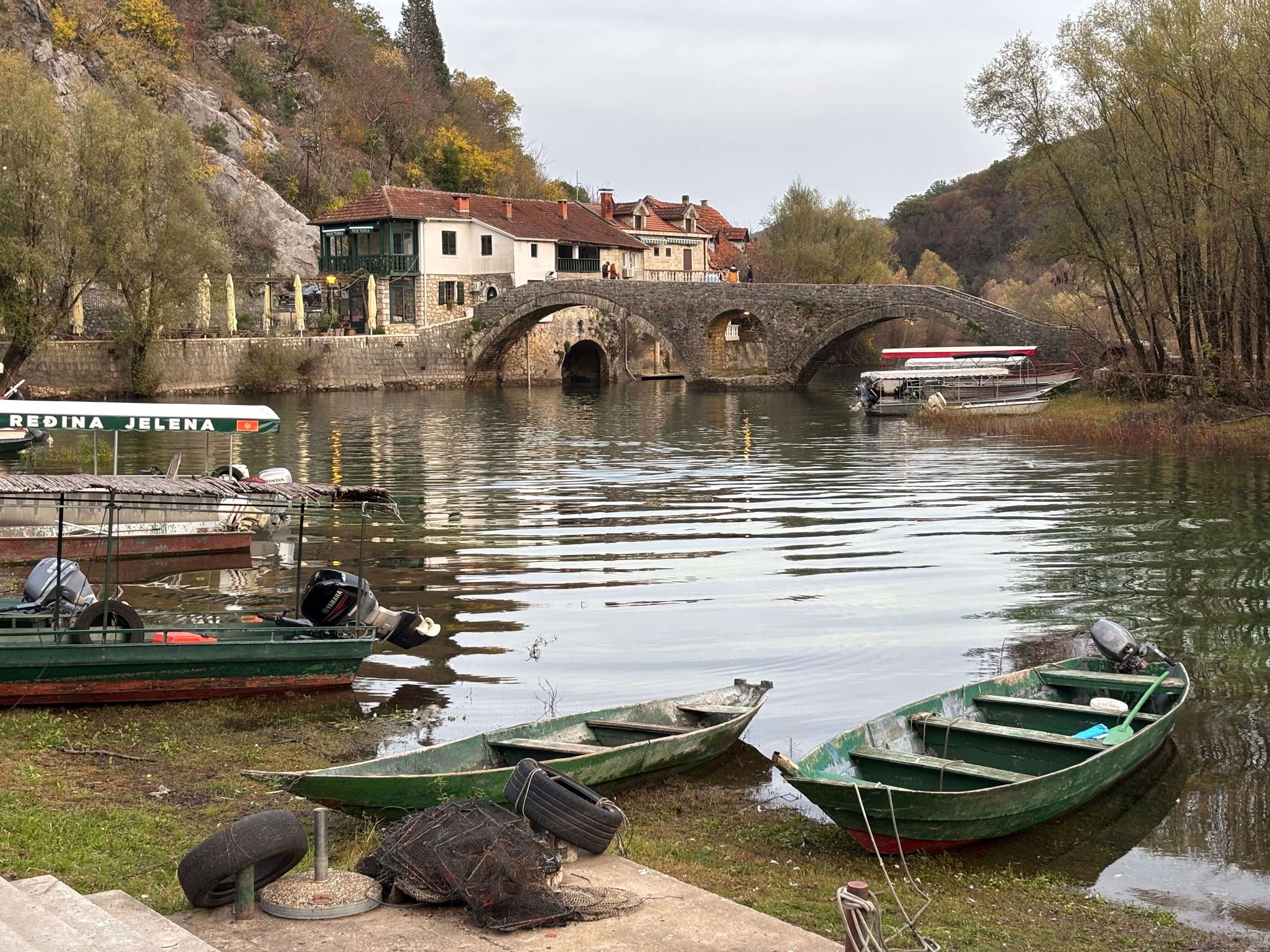
Two stone arches over a green river. Prince Danilo built this bridge in 1853 in memory of his father, and it still stands in the middle of the village.
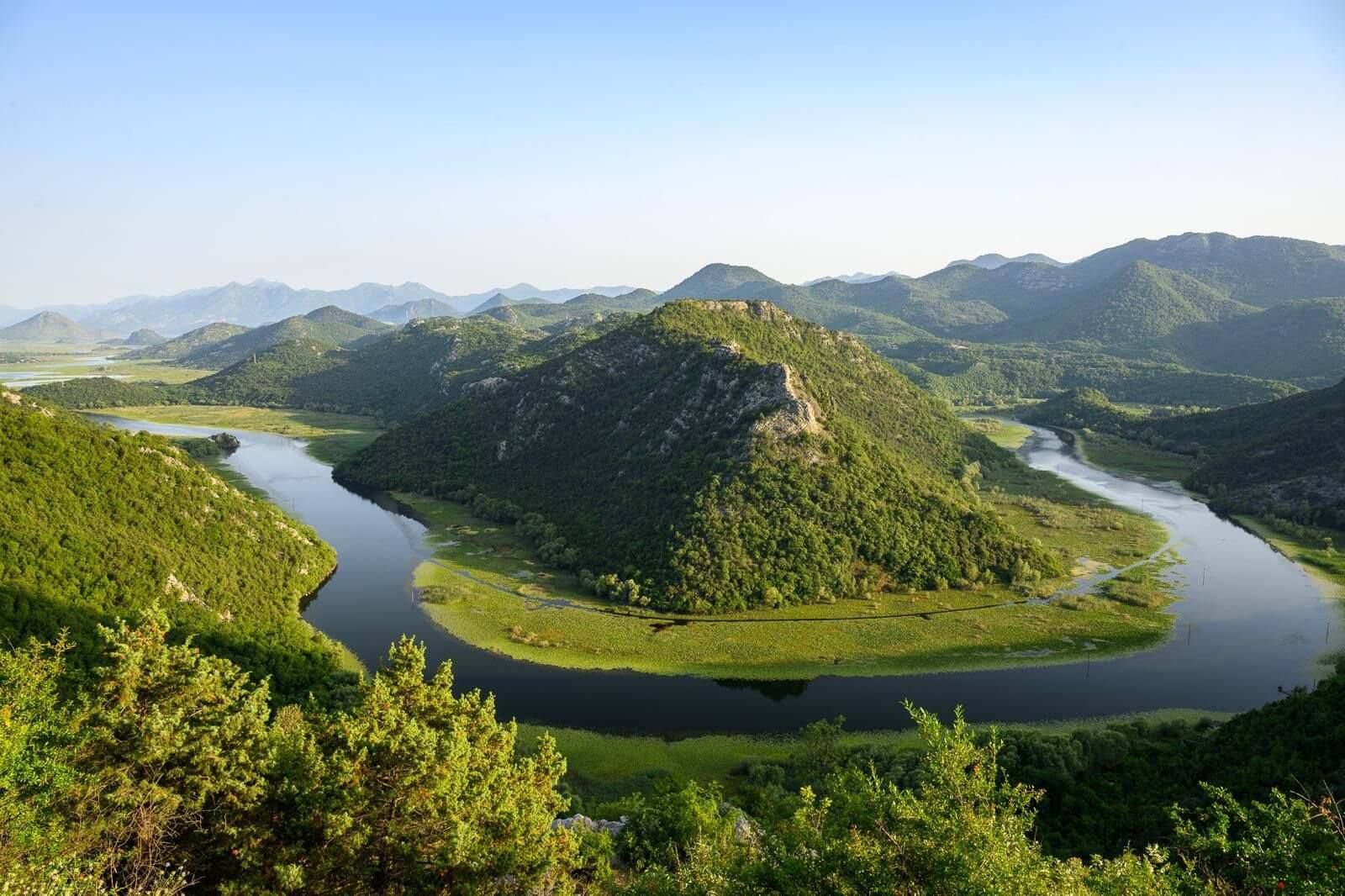
Here the river turns in a wide horseshoe bend. From Pavlova Strana you see the whole bend from above, with the lake behind it.
We use Google Tag Manager for anonymous visit statistics, only with your consent.